Crypto in 2026 and 2027 is a liquidity and narrative bet, not a guaranteed payday
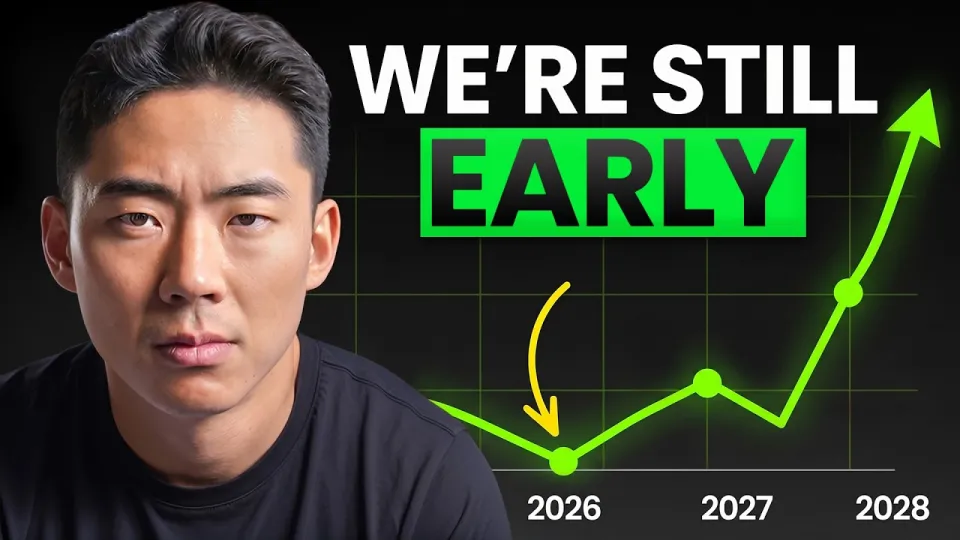
Video: my plan to make millions in crypto 2027
You can order the same kind of articles for your own video to boost it on YouTube and Google. Just message the Telegram bot @sat_sit_bot. It writes articles around your video, embeds the video and publishes them on popular niche websites (no ads). Your first 50 articles are free.
· based on the channel Brian Jung
Crypto planning for 2026 and 2027 starts with one honest answer: no one can promise millions from a market this speculative, but you can build a repeatable process. That process rests on three inputs — liquidity conditions, the narratives attracting capital, and position sizing that survives a 40–60% drawdown. Brian Jung's breakdown of his own plan, and the Kaizen Pro waitlist he points viewers to at the Kaizen Pro product page, follows the same logic: thesis first, sizing second, exit rules before entry.
Why liquidity, not headlines, drives the crypto cycle
Crypto prices follow the cost of money more reliably than they follow any single news event. When global liquidity expands and real yields fall, capital rotates out of cash and into risk assets, and crypto is usually the highest-beta expression of that rotation. When liquidity tightens, even good projects bleed.
That is why the bullish case for the next cycle is not built on one catalyst. It is built on a sequence:
- Central banks move from tightening to easing as growth slows.
- Stablecoin supply grows, which is the clearest on-chain proxy for dry powder waiting to be deployed.
- Spot ETF and institutional channels keep absorbing Bitcoin supply, shrinking the free float.
- Retail returns last, typically after the move is already well underway.
The practical takeaway is that you do not need to predict the exact month of a cycle top. You need to know which conditions would invalidate your thesis — for example, stablecoin supply contracting for several consecutive months or a sustained rise in real yields — and size positions so that being early does not force you out.
The narratives that tend to attract capital first
Narratives are how capital chooses between thousands of tokens, and the ones with real revenue or real institutional demand usually lead. The most durable themes in this cycle:
- Bitcoin as a macro asset. ETFs, corporate treasuries and sovereign discussions have turned BTC into a portfolio allocation question rather than a curiosity.
- Ethereum and layer-2 scaling. Staking yield, restaking and rollup activity keep ETH at the center of on-chain finance, even when its price lags.
- Real-world asset tokenization. Tokenized treasuries and private credit are the clearest case of TradFi adopting crypto rails rather than fighting them.
- Stablecoin payments. Regulatory frameworks, including US stablecoin legislation, have moved dollar-backed tokens from grey area to regulated product, and payment volume is the metric to watch.
- AI-linked tokens and DePIN. Compute, data and bandwidth marketplaces are early, volatile and prone to hype, but they attract genuine developer activity.
- Layer-1 ecosystems such as SUI and Solana. Fast, cheap chains with active developer communities compete for the same users, and rotation between them is often violent.
A useful filter: a narrative with usage metrics — fees, active addresses, stablecoin inflows — survives a drawdown; a narrative built only on a ticker does not.
A concrete plan for making millions in crypto without blowing up
The honest version of a "millions" plan is a barbell: most of the capital in assets that can survive a bear market, a smaller slice in asymmetric bets, and strict rules for taking profit. A workable structure looks like this:
- Core (50–70%): Bitcoin and Ethereum, held in self-custody or a reputable custodian, accumulated in tranches rather than in one click.
- Satellites (20–30%): three to five high-conviction narratives — tokenization, stablecoin infrastructure, one or two layer-1 ecosystems — sized so that a total loss on any single one is tolerable.
- Cash and stablecoins (10–20%): dry powder for drawdowns, earning yield only where the counterparty risk is understood.
- Entry rules: fixed schedule plus opportunistic buys at predefined drawdown levels, for example adding on 20% and 35% declines from local highs.
- Exit rules written in advance: scale out at predetermined multiples, take initial capital off the table after a set gain, and rebalance quarterly so one winner does not become 80% of the portfolio.
Leverage is the variable that turns a good plan into a liquidation event. If a 30% wick would end your position, the position is too large regardless of how strong the thesis feels.
The doubts worth taking seriously
Experienced traders raise three objections to any cycle thesis, and each deserves a concrete answer rather than a dismissal.
"The same bullish case was made last time and I lost everything." That usually means the plan had no risk limits, not that the thesis was wrong. Position sizing, no leverage on illiquid altcoins, and a written maximum drawdown per position are what separate surviving a cycle from being removed by it.
"Regulatory rejection would be better for crypto." Some holders argue that banks and regulators entering the space dilute its purpose. The counterpoint is practical: ETF access and stablecoin rules bring capital and legitimacy, and the market has consistently rewarded liquidity over ideology in the short term.
"The top will not arrive until much later." Cycle timing is genuinely uncertain, and calls range from an early peak to an extended run into the end of the decade. The response is not to pick a date but to define what would make you reduce exposure — for example, extreme funding rates, euphoric retail inflows, or a parabolic move in a short window.
"Isn't this just 'it could go up or down'?" Partly, yes — but the difference between a coin flip and a plan is that the plan specifies how much you risk, when you add, and when you take profit.
Where to follow the research behind the plan
All primary sources from the breakdown are listed here so you can verify the framework yourself:
- Kaizen Pro waitlist: https://whop.com/kaizen/products/kaizen-pro/
- Free crypto market report newsletter: https://newsletter.kaizen.gg/subscribe
- X (Twitter): https://twitter.com/thebrianjung
- Instagram: https://www.instagram.com/creditbrian
- Risks and disclaimers document: https://docs.google.com/document/d/1WIgz8SB1mMzke0uvLt_6zXmSbqLL4gL5VgpDnVEk5m8/edit?usp=sharing
Treat every one of these as educational material. None of it is financial advice, and the disclaimers in the source material say so explicitly.
Final takeaway
A crypto plan for the next cycle is less about picking the single best token and more about surviving long enough for a correct thesis to pay off. Brian Jung's breakdown is useful precisely because it separates the macro case, the narrative map and the execution rules instead of promising a number. Build a core in Bitcoin and Ethereum, take measured satellite bets on narratives with real usage, and write your exit rules before you need them. If you want the structured version of that process, start with the Kaizen Pro waitlist and keep your position sizes honest.
Key takeaways
- Brian Jung's breakdown frames the next crypto cycle as a liquidity-driven story rather than a single-event trade.
- Narratives discussed include real-world asset tokenization, stablecoin payments, AI-linked tokens and layer-1 ecosystems such as SUI and Ethereum.
- The plan structure is boring on purpose: core Bitcoin and Ethereum allocation, smaller satellite bets, staged entries and written exit rules.
- The biggest risk cited by viewers is cycle timing, since a 2025-style drawdown can wipe out leveraged positions before any 2027 thesis plays out.
- Regulatory clarity, including stablecoin rules, is treated as a tailwind for adoption, not as a guarantee of price direction.
Questions & answers
Is a crypto bull run in 2027 actually likely?
It depends on liquidity conditions rather than a calendar. Falling real yields, expanding stablecoin supply and continued institutional absorption of Bitcoin supply are the signals that historically precede sustained rallies. If those conditions reverse, a bullish thesis for any specific year weakens regardless of how popular the narrative is.
How much of a portfolio should go into altcoins?
A common barbell approach puts 50–70% in Bitcoin and Ethereum, 20–30% across a handful of high-conviction narratives, and 10–20% in cash or stablecoins. The correct number is the one where a total loss on any single altcoin position would not change your financial situation.
What is the biggest mistake people made in the previous cycle?
Over-sizing and using leverage on illiquid tokens. Many holders who were directionally right still lost everything because a sharp drawdown liquidated them before the thesis could play out. Written exit rules and a maximum drawdown per position prevent that outcome.
Does regulatory approval hurt crypto's original purpose?
Some long-term holders argue that banks and regulators entering the space dilute decentralization. In practice, ETF access and stablecoin legislation have brought capital and legitimacy, and markets have tended to reward liquidity over ideology in the short term.
Source: my plan to make millions in crypto 2027 · Markdown version